The figures below come from the Australian Government's National Waste Report and published consumer research. This guide replaces two older posts on the Jack's blog and was updated on 25 August 2026.
Australia throws away a staggering amount of usable material every year. As a crew that has sorted rubbish by hand since 1989, we see it up close: good furniture on the kerb, full wardrobes going to landfill, and skip after skip of mixed waste that nobody sorted. Here are the numbers, and what you can do about them at home.
The big picture
- Australian households produced 12.4 million tonnes of waste in the most recent National Waste Report year, about 16.3 per cent of the national total.
- Australia produced 2.5 million tonnes of plastic waste. Only 9 per cent was recycled. About 84 per cent, 2.1 million tonnes, went to landfill.
- 15.3 million tonnes of organic waste was generated. Nearly half of it, 45 per cent, went to landfill, and households were the biggest source at 6.4 million tonnes.
- About 36,000 people work in waste collection, treatment and rubbish removal, and the industry contributes almost 5 billion dollars to the economy.
Clothing: the quiet mountain
Clothing is one of the worst offenders in Australian landfill. Roughly 6,000 kilograms of clothes are thrown out every ten minutes nationally, about 36,000 kilograms every hour, and most of it goes straight to landfill. Three in four Australian adults threw out clothing in the past year, and around a quarter have binned a garment after wearing it once. Producing the cotton for a single shirt can take about 2,700 litres of water, so every shirt in landfill carries a lot of wasted resources with it.
When we clear a house, wearable clothing goes to charity, not the tip. It is one of the easiest wins in the whole job.
Bottles and cans
Australians go through about 17 billion drink bottles and cans a year, and fewer than half are recycled. That is roughly 15,000 containers discarded every minute. Plastic in waterways takes centuries to break down, and glass is endlessly recyclable, which makes the low return rate a genuine waste. The NSW Return and Earn scheme pays 10 cents per eligible container, so a big clear-out can actually earn a little money back.
What the numbers mean at your place
Most household waste is not really waste. In a typical clear-out we find furniture that can be donated, metals and e-waste that can be recycled, green waste that can become mulch, and only a portion that genuinely belongs in landfill. The difference between a sorted load and an unsorted one is where it all ends up.
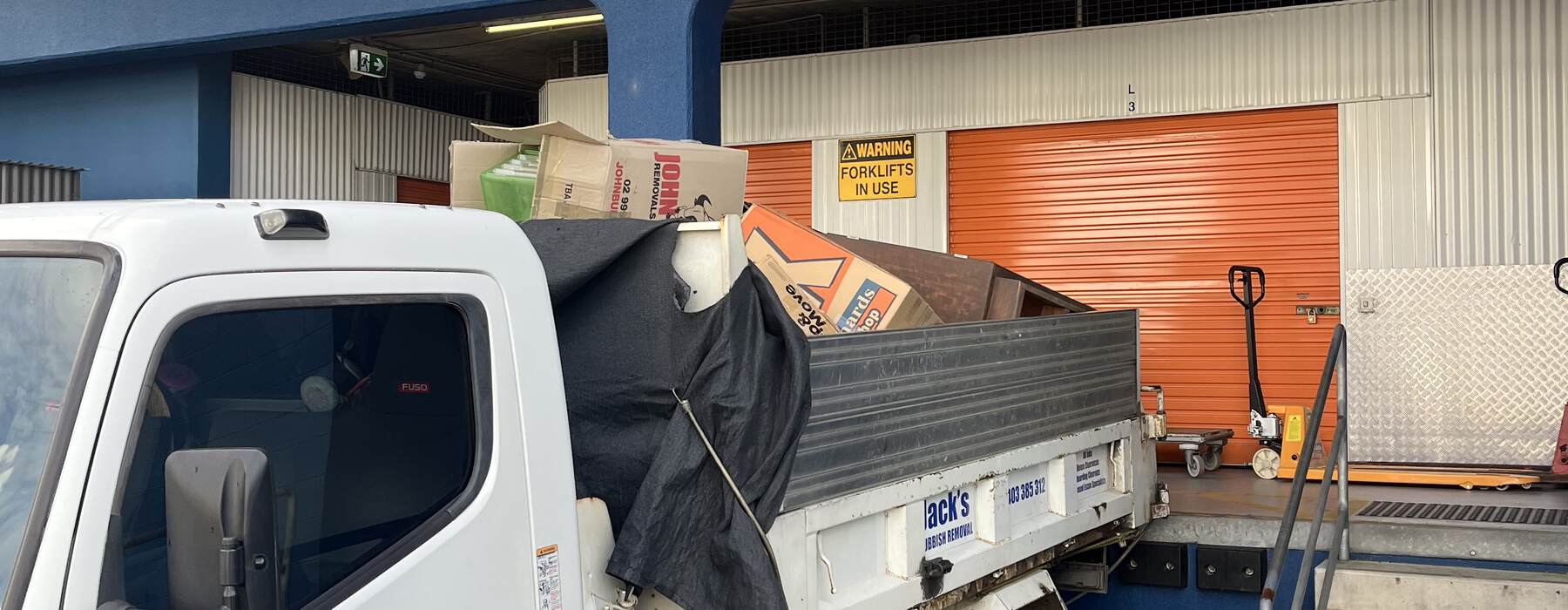
That is the main reason we run trucks with a crew instead of dropping skips. A skip gets tipped as mixed waste at the highest landfill rate. Our crew sorts as we load, so recyclables get recycled, donations get donated, and you only pay landfill rates on what is actually landfill. You can read the full comparison in our skip bins vs rubbish removal guide.
How to cut your own numbers
- Donate wearable clothing and working furniture before you bin anything.
- Use Return and Earn for drink containers. Ten cents each adds up over a big clean-out.
- Keep green waste separate. Mixed with general rubbish it all goes to landfill; on its own it becomes mulch. Our green waste removal service keeps it separate for exactly that reason.
- For a big clear-out, use a service that sorts. Ask any removalist one question: what happens to the load? If the answer is vague, it is going to landfill.
Common questions
How much waste do Australian households produce?
In the most recent National Waste Report figures, Australian households produced 12.4 million tonnes of waste in a single year, about 16 per cent of everything the country threw away. Households were also the biggest single source of organic waste at 6.4 million tonnes.
How much of Australia's plastic waste gets recycled?
Very little. Of the 2.5 million tonnes of plastic waste Australia produced in the reporting year, only about 9 per cent was recycled. Around 84 per cent, more than 2 million tonnes, went to landfill. That is one reason sorting loads properly matters.
What happens to the rubbish Jack's collects?
Every load is looked through and sorted. Anything of value is returned to you, recyclables are separated, and the rest goes to an official facility, usually Kimbriki on the Northern Beaches. We never dump a load, and tip fees are included in the fixed quote.